 |

|
|
|
|
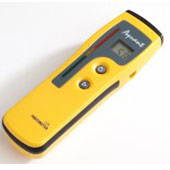
Protimeter Aquant
Non-Invasive Moisture Meter
The Protimeter Aquant is used to assess and monitor the relative moisture level of building materials including plaster, drywall, masonry, concrete and fiberglass (GRP). It is ideal for checking the relative moisture condition of building elements such as solid walls and floors prior to more rigorous and time-consuming investigative procedures that may be required. The Aquant can be used to detect the presence of moisture behind floor and wall coverings such as ceramic tile and vinyl floor coverings. It can also be used for surveying GRP boat hulls for the early detection of damp spots that could lead to blistering caused by osmosis.
|
|
| |
|
|
|
The Aquant has a digital display that is synchronized with a color-coded LED scale. The display shows the relative moisture level of the material under investigation on a scale of 0-999 and the color coded LED scale indicates the materials moisture condition. To use, the Aquant is simply held against the surface of the material under investigation. The relative moisture level is measured by radio frequency to a nominal depth of 10-20mm. There are no needles to mark the surface and the Aquant is not adversely affected by moisture.
- Range 0 999 Relative
- Display 12— Digital LCD
- Display 2— 60 LED’s
- Hold Reading Feature
- Depth of measurement—Up to ¾”
- Case—Pouch with belt loop.
- Power—9v (supplied)
- Warranty—1 Year parts and labor
|
|
|
|
|
|
|
- Detects moisture directly in materials and below wall
and floor coverings such as tile, wood and vinyl.
- Reset reading for sensitivity adjustment
- Not adversely affected by surface moisture such as condensation.
- Dual Display LCD and LED.
- Color changing LED’s to show moisture condition.
|
|
|
|
|

 |
 |
|
BLD5760
- Aquant
Protimeter
Aquant™ Non-Invasive Moisture Meter:
- Digital LCD
- Pouch with belt loop
- Full instructions
|
|

|
 |
|
BLD1700 - Dampness in Buildings
The Protimeter book on dampness diagnosis, treatment and available
measurement techniques. The 'Dampness in Buildings' book
explains the nature of dampness in buildings, how to
diagnose a dampness problem as well as how to deal with the issue.
It covers such areas as rising damp, condensation, bridging and
rainwater ingress and penetration. |
|
|
